Missouri River Lumber
20 Hours a Week Back: Missouri River Lumber

20 Hours a Week, Gone
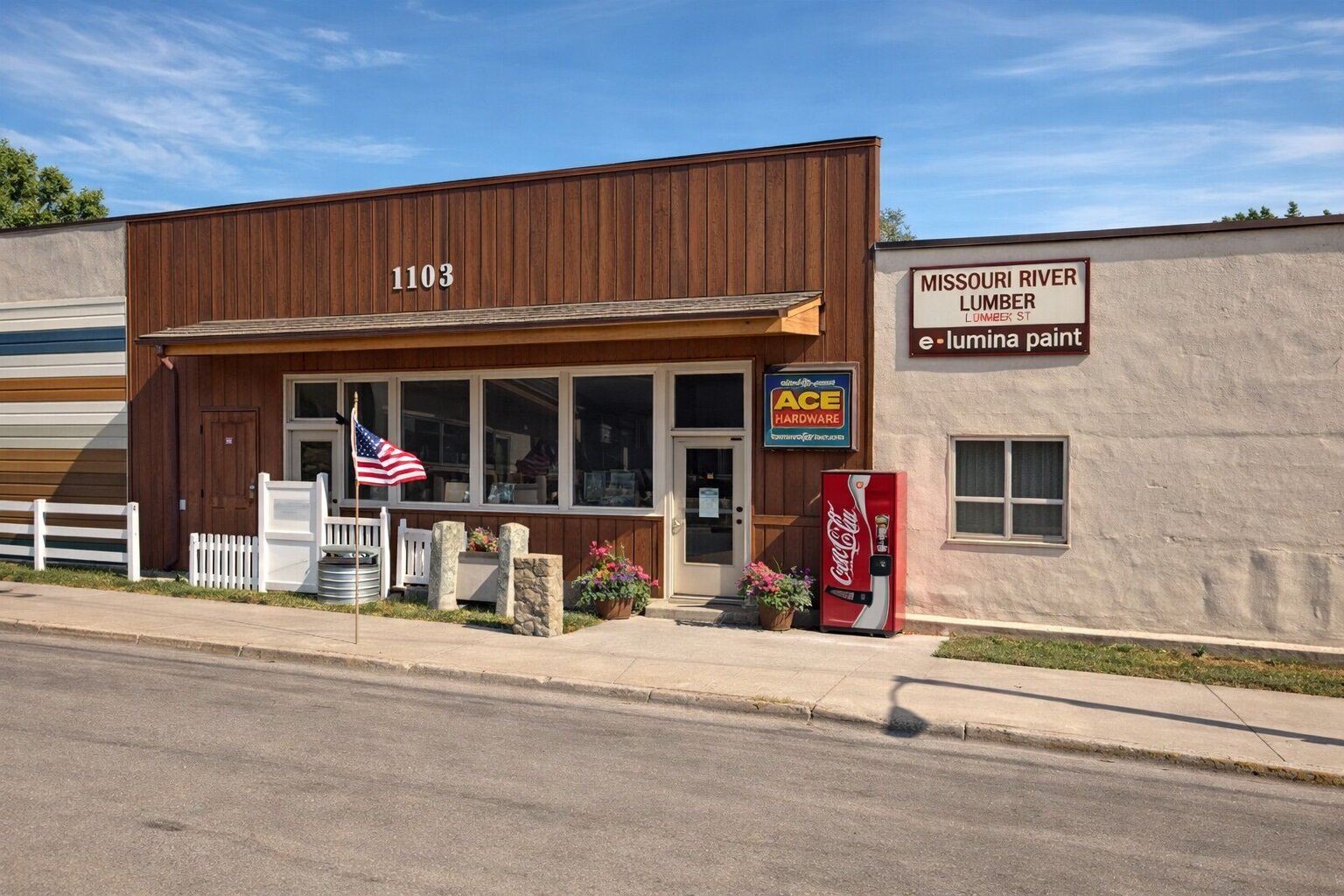
Philip Fondale is a one-man show at Missouri River Lumber, a small-town lumber yard and hardware store in Fort Benton, Montana that has been serving its community since 1910. When you are the only person running the entire operation, every hour matters, and Philip was losing somewhere between ten and twenty of them every single week to the administrative chaos of managing two separate point-of-sale systems that refused to talk to each other.
That is not a typo. Twenty hours a week, just wrestling with software that was never built for a lumber yard.
From Deloitte to the Lumber Yard
Philip's path to owning a century-old lumber yard is not exactly what the career counselors would have predicted. After grad school, he was recruited into data security at Deloitte, where he spent his days behind a desk doing accounting work until the interest rate hikes rolled through and he found himself on the wrong side of a layoff. Instead of sending out resumes to other accounting firms, Philip decided he was done with desk life entirely and bought Missouri River Lumber three years ago.
The business had been around since 1910, which means it has survived two world wars, the Great Depression, and presumably at least one really bad Montana winter, so Philip figured he could handle whatever came next. What he did not expect was that the hardest part of running a lumber yard in the 2020s would not be lumber at all; it would be the point-of-sale system.
The Shopify and QuickBooks Nightmare
The previous owner had moved the store onto Shopify, which sounds reasonable enough until you remember that Shopify is fundamentally an online storefront platform. It was built to sell t-shirts and candles on the internet, not to ring up 14.7 linear feet of pressure-treated decking for a contractor who has been running a charge account at your store since before you owned it.
Shopify could not handle decimal quantities, which is a fairly significant problem when your entire business revolves around selling things by the foot, by the pound, and by the board foot. Even more painful, Shopify had absolutely no concept of charge accounts, the bread and butter of any lumber yard's relationship with its contractor customers. These are the folks who come in five days a week, load up their trucks, and settle up at the end of the month. It is how lumber yards have operated for over a hundred years, and Shopify simply could not do it.
So Philip found himself running two systems simultaneously: the old legacy system for all of his charge account customers, and Shopify for everyone else walking in the door. Inventory was a mess because no single system had the full picture. Every sale had to be mentally routed to the correct system before it could be rung up. And at the end of each day, Philip, the one-man show, had to reconcile all of it by hand.
If you have ever tried to keep two sets of books in perfect sync while also helping customers find the right grade of plywood, you can appreciate why Philip described this period with a single word: nightmare.
How Rundoo Showed Up
Philip's distributor, Horizon Distribution, had started working with Rundoo and reached out to see if he wanted to give it a try. Philip, who was drowning in dual-system busywork and had the technical chops from his Deloitte days to evaluate software quickly, said yes.
The implementation was straightforward. Philip's background in data security and accounting meant he picked up the system fast (his words: "just tell me the basics and I can get through it"), and Missouri River Lumber went live on Rundoo in December 2025.
One System, Twenty Hours Back
The difference was immediate. Rundoo handles charge accounts natively, which meant Philip could finally stop splitting his customers between two separate systems like some kind of retail Solomon. Decimal quantities, contractor accounts, inventory tracking: all of it lives in one place now, and it all actually works the way a lumber yard needs it to.
The impact Philip quantified is striking: ten to twenty hours saved every single week. For a one-man operation, that is not a marginal improvement; that is the difference between running a business and being run by your software. Those are hours Philip now spends doing what he actually enjoys most about owning a lumber yard: helping people solve problems. A contractor walks in trying to figure out how to frame a tricky addition, a first-time homeowner needs to know which grade of lumber will hold up on a deck, and Philip gets to be the guy with the answer instead of the guy stuck behind a screen reconciling two systems that were never meant to work together.
"You guys save anywhere between ten to twenty hours a week not having to do dual systems."
Missouri River Lumber has been serving Fort Benton since 1910. Philip Fondale bought it three years ago because he wanted to solve real problems for real people, not stare at spreadsheets in a Deloitte office. Rundoo just made sure his point-of-sale system stopped getting in the way of that.
Suppliers & partners
Recommended reading
Ordering from Bradley Caldwell, PACOA, and your farm-and-home distributors
How farm, feed, and pet-supply stores that buy from Bradley Caldwell, PACOA, Wallace, and Orgill turn distributor ordering into a search and a scan instead of a portal and a clipboard.
Net-30 without the headache: contractor charge accounts for paint stores
Contractor charge accounts are the financial backbone of a paint store, and doing them right means house accounts, per-customer pricing, clean statements, real aging, and a way for painters to pay from their phone instead of the shoebox-and-spreadsheet workaround a general POS forces on you.
Farm accounts, seasonal terms, and getting paid at harvest
How farm and feed stores run charge accounts on the growing calendar, from house accounts and per-customer pricing to statements, aging, and seasonal terms that let producers pay after harvest.
More lumber stores on Rundoo
See Rundoo run a store like yours
Book a demo and we will walk you through how Rundoo works for a store like yours, at your pace and on the questions that matter to you.